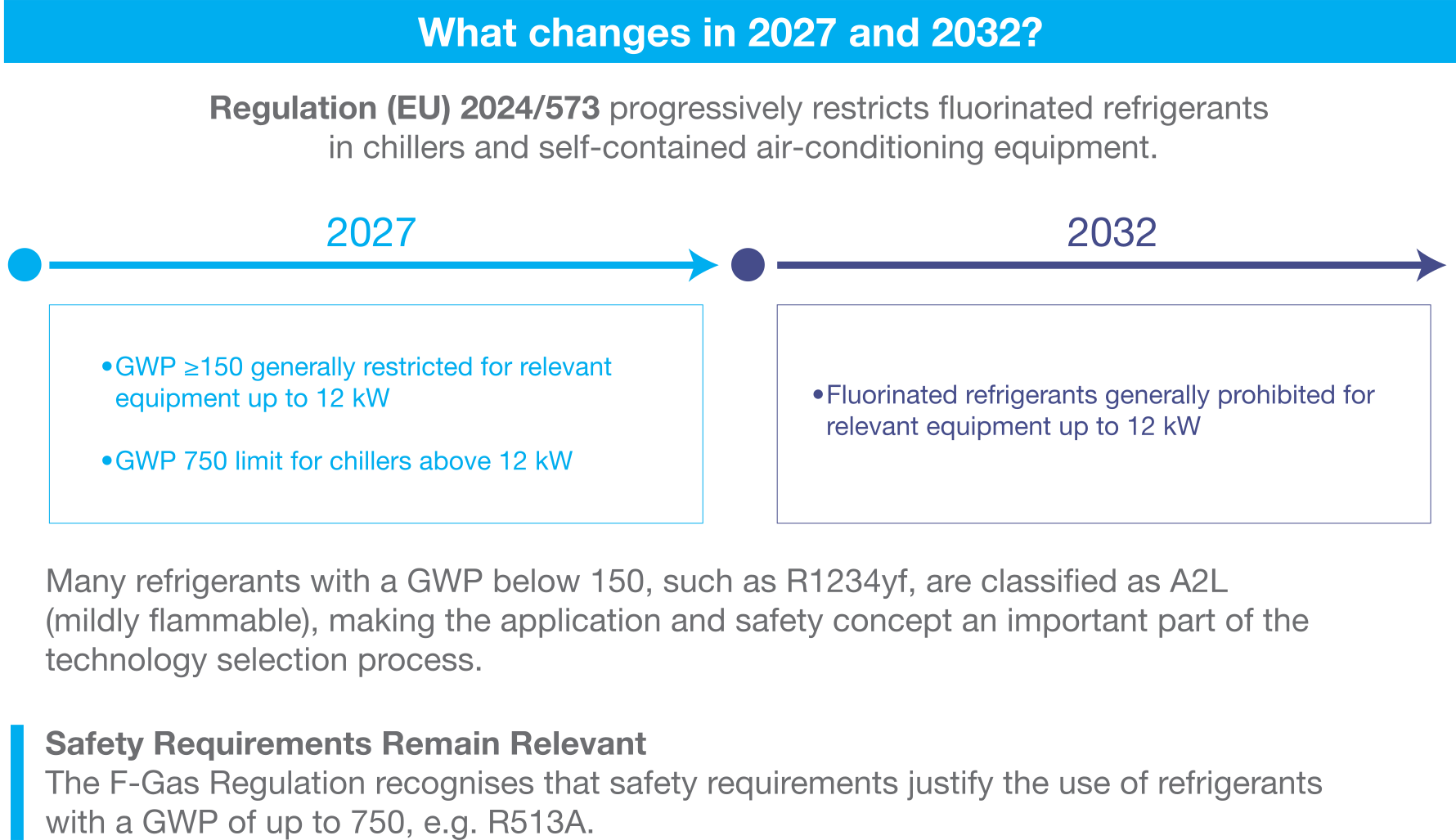
Supporting Your F-Gas Transition
Pfannenberg helps customers navigate the F-Gas transition with application-driven cooling solutions.
Rather than starting with the refrigerant, we begin with the application. We assess safety, compliance, and lifecycle requirements to recommend the cooling solution that best meets operational needs while balancing environmental responsibility and long-term reliability.
Application -> Safety -> Refrigerant Selection -> Solution
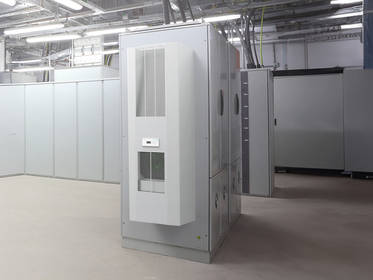

Application first: Selecting the Right Cooling Solution for Your Application
Every application has unique requirements.
Cooling performance, temperature stability, energy efficiency, operating environment, serviceability and lifecycle risk must be assessed together.
A machine tool operating globally faces different challenges than a battery energy storage system, a laser application, or critical infrastructure.
That's why Pfannenberg starts with the application, not the refrigerant.
We evaluate the operating environment, safety requirements, and lifecycle expectations to identify the cooling technology best suited to your application.
Safety Beyond the Factory: Prevent Risks Across the Lifecycle
Safety extends far beyond factory testing.
Machine safety starts by preventing avoidable risks wherever possible. Factory testing is the starting point, not the end. Transport, relocation, vibration, ageing, maintenance and accidental damage can all impact the integrity of a cooling system.
That's why cooling solutions should be evaluated not only for performance and regulatory compliance, but also for long-term operational safety.
We Consider the Residual Risk
For systems using non-flammable A1 refrigerants, a leak primarily presents environmental, performance, and service-related risks.
For systems using mildly flammable A2L refrigerants, the assessment must also consider whether a leak could create a flammable concentration, particularly within confined enclosure spaces or near potential ignition sources.
Choosing the right refrigerant
R513A or R1234yf? Two Different Safety Pathways
R513A reduces an inherent hazard through its A1 non-flammable classification. R1234yf offers an ultra-low-GWP pathway where mild flammability can be safely engineered and controlled. If the application or lifecycle cannot be sufficiently controlled, evaluate a non-flammable pathway first.
R513A - When Safety Comes First
R513A is a non-flammable A1 refrigerant that is recommended when the application assessment identifies a non-flammable solution as the most appropriate choice.
Typical Applications Include:
- Restricted enclosure volumes
- Potential ignition sources
- Harsh environments
- Long equipment lifecycles
- Safety-critical operations
Our objective is not the lowest GWP at any cost. It is the lowest environmental impact that can be achieved without compromising the required level of safety.
R1234yf - Safety by Application Design
R1234yf is an A2L refrigerant with an ultra-low GWP and is increasingly being adopted for industrial cooling applications.
It is best suited for applications where mild flammability can be safely evaluated and managed through appropriate system design, operation, and maintenance.
Pfannenberg is expanding its A2L portfolio to support customers seeking ultra-low-GWP cooling solutions while maintaining a strong focus on safety, compliance, and reliability.
The Safest Sustainable Solution for Every Application
Technology-Neutral by Design
There is no single cooling technology that is right for every application. Pfannenberg follows a technology-neutral approach, selecting the solution that best balances safety, performance, regulatory compliance and environmental impact. Depending on the application, this may include:
- Refrigerant-free cooling technologies
- Non-flammable A1 refrigerants
- Ultra-Low GWP A2L refrigerants
- CO₂ solutions
- Other natural refrigerants
F-Gas ready portfolio
Our portfolio continues to evolve so customers can choose safe, reliable and compliant solutions that match their application requirements.
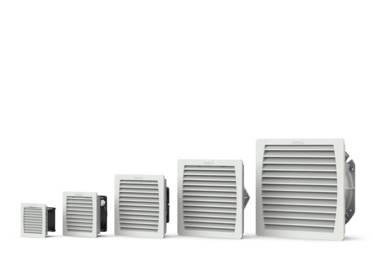
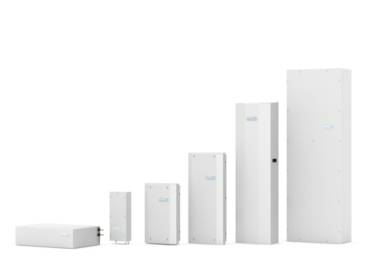
Cooling Units
Our cooling unit portfolio is on track to support both A1 and A2L solutions, helping customers navigate the F-Gas transition with confidence. Detailed availability by product series and technology pathway is provided in our product roadmap.
COOLING UNITS F-GAS ROADMAP
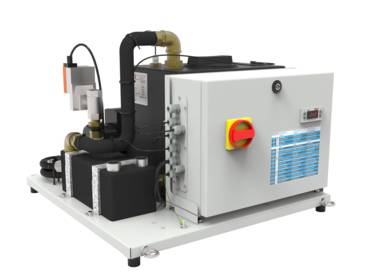
Chillers
Our chiller portfolio already supports both transition pathways: R513A for non-flammable, low-GWP applications and A2L-ready solutions below 12 kW for applications designed to safely manage mild flammability.
CHILLER F-GAS ROADMAP
Refrigerant-Free Thermal Solutions
In some applications, refrigerant-free cooling technologies can be the most effective long-term solution, supporting safety, reliability and simplified operation.

Find the Right Path for Your Application

Need support with your refrigerant risk assessment?
Contact our experts to assess your application and develop your individual product and refrigerant roadmap.
Make Your Cooling Strategy Ready for 2027, 2032 and Beyond
Do not wait until a refrigerant restriction becomes a product availability problem. Together, we can determine which applications can transition to R1234yf, CO₂, other natural refrigerants or refrigerant-free cooling—and where a documented non-flammable pathway should be evaluated.
Dowload
| Description | Language | Type | Size | Download |
|---|---|---|---|---|
Regulatory Framework and Risk Assessmentfor the Use of R-513A vs A2L_A3 Refrigerants in Industrial Cooling |
|
160 KB | Download | |
Regulatory and Operational Implications of Using Propanein Industrial Cabinet Cooling Units |
|
130 KB | Download | |
Regulatory and Operational Implications of Using R1234yf-A2Lin Industrial Cabinet Cooling Units |
|
130 KB | Download | |
Executive SummaryFor a concise executive overview of why enclosure cooling units are considered safety-critical applications, download the Executive Summary |
|
110 KB | Download |
FAQs
How does Pfannenberg help me stay compliant with F‑Gas requirements?
Pfannenberg actively tracks evolving F‑Gas regulations across all markets and ensures that every product recommendation reflects the current classification status. Compliance is handled as part of our process - not as something customers need to manage alone. We provide clear documentation, support customs requirements, and communicate early about any regulatory or timeline impacts, so your equipment remains safe, reliable and compliant throughout its lifecycle.
How do I know which cooling solution is right for my application?
We begin with the application, not the refrigerant. Our team evaluates the operating environment, installation conditions, proximity to personnel, and the consequence of failure. Only after understanding these safety and performance requirements do we recommend the most appropriate cooling solution. This approach ensures that safety, reliability and compliance guide the decision - not regulation alone.
What documentation supports customs and compliance?
Pfannenberg provides all necessary compliance and customs documentation, including classification details and regulatory support materials. Because customs clearance and shifting timelines are a major customer concern, we make documentation easy to access and communicate proactively about any potential impacts. Our goal is to remove uncertainty and help ensure smooth delivery and regulatory confidence.
What should I consider if my application involves flammable refrigerants?
Applications involving A2L or A3 refrigerants require careful evaluation of safety requirements. Pfannenberg provides guidance on ventilation, handling procedures, installation conditions and risk‑assessment considerations appropriate to mildly flammable (A2L) or flammable (A3) refrigerants. We treat these recommendations with seriousness and ensure customers understand the safety implications before discussing paperwork or compliance.
How does Pfannenberg support risk‑assessment conversations?
Pfannenberg supports your risk‑assessment process by helping you evaluate the factors that matter most for safe operation—your environment, installation conditions, operator proximity and long‑term reliability. We walk through these considerations with you so you can make informed decisions about the right cooling approach. Formal site‑specific validation always remains with you or your appointed assessor, but we provide the guidance, application review and safety insights needed to support a confident, well‑grounded risk‑assessment discussion.
When does R513A make sense, and when might A2L be appropriate?
R513A (A1) is our recommended standard for most industrial applications because it is nonflammable, proven, and reliable across a wide range of environments. It is often the safest and most practical starting point. A2L options—such as R1234yf or R454C—are available. Both A1 and A2L are valid choices, selected based on application needs, safety requirements and installation conditions.
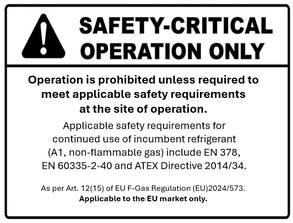
Why will units <12k W with R513A show the label "For Safety-Critical Operations Only"?
Under the F-Gas Regulation, equipment <12 kW using refrigerants such as R513A will carry the label "For Safety-Critical Operation Only". The label reflects the continued use of non-flammable refrigerants in applications where documented safety requirements justify their selection. It is part of the regulatory framework and does not indicate a limitation of the equipment itself.
Why does Pfannenberg start with the application instead of the refrigerant?
Because the safest, most reliable and compliant solution depends on the specific operating environment, safety requirements and performance needs of the application.