Over 70 Years of Protecting What Matters
Our approach ensures every solution is safe, reliable and compliant, while supporting long-term operational performance in real-world industrial environments.
Guidance Through Every Stage of the Transition
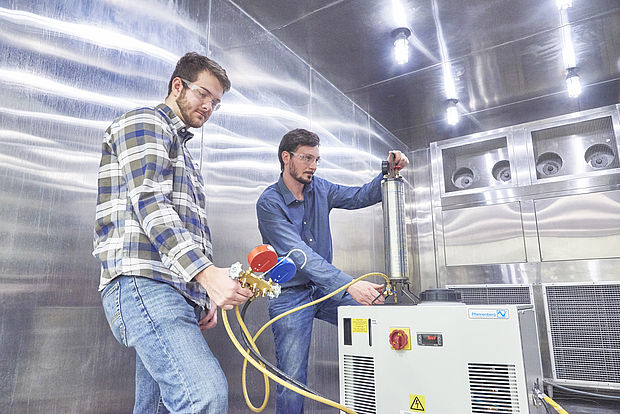
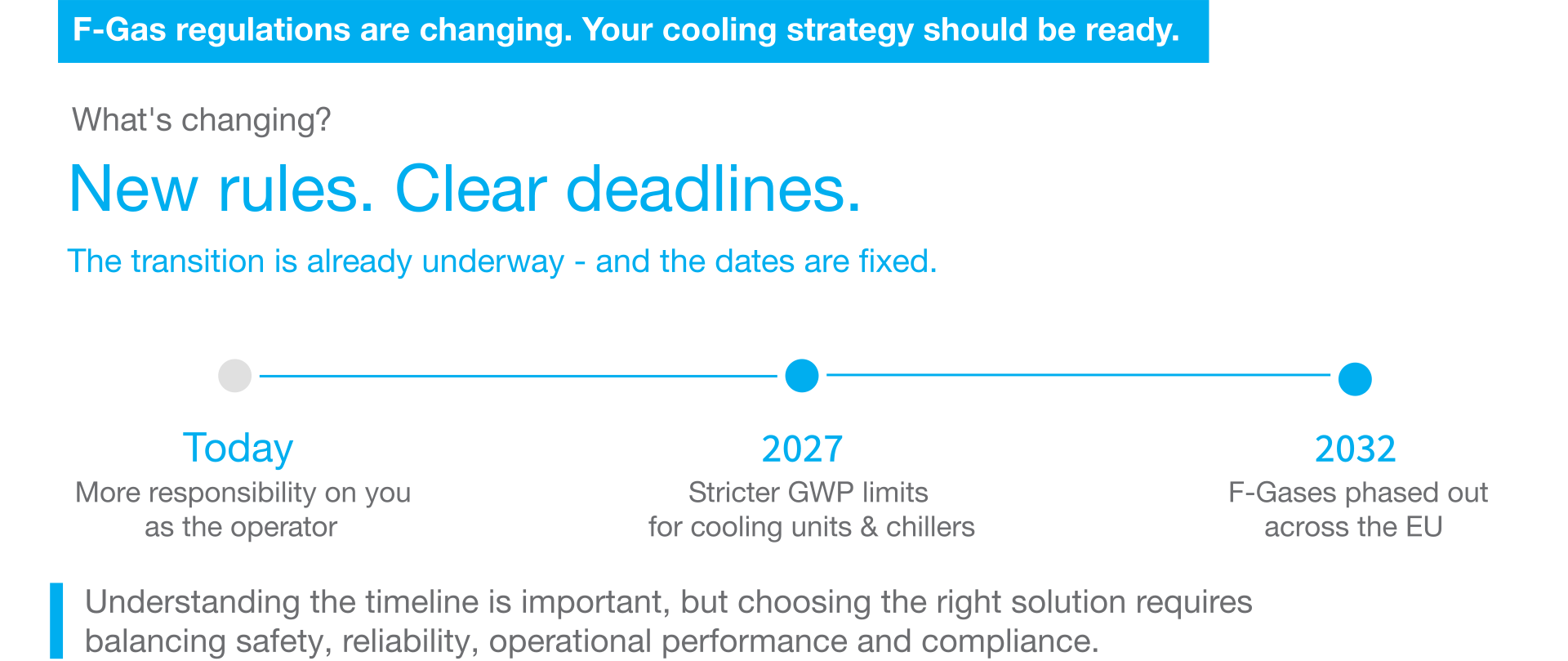
We support your F‑Gas transition end‑to‑end, starting with early planning that aligns your project with the 2027 and 2032 milestones. By mapping your cooling needs against future regulatory constraints, we help you anticipate changes instead of reacting to them. This upfront clarity reduces downtime, avoids last‑minute choices, and ensures your system remains safe and reliable throughout the transition. Every transition begins with understanding the application. From planning and refrigerant selection to compliance support and long-term operation,
Pfannenberg helps customers move forward with confidence. Selecting the right refrigerant is central to this process, and we match each option to the technical realities of your environment. Once the choice is defined, we manage the switch for you through cross‑referencing, compatibility checks, and retrofit support. This structured approach ensures continuity of performance, protects your equipment, and simplifies the move to your next‑generation refrigerant. In three steps, the entire transition becomes predictable, safe, and technically sound.
Move from regulatory uncertainty to guaranteed compliance.

Application: Selecting the Right Cooling Solution for Your Application
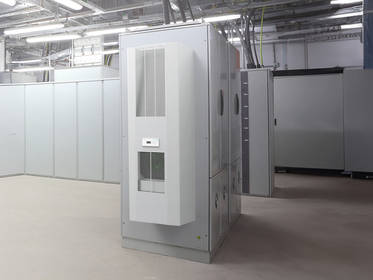
The best cooling solution is not defined by refrigerant alone. It is determined by the application, operating environment, safety requirements, reliability expectations and compliance needs.
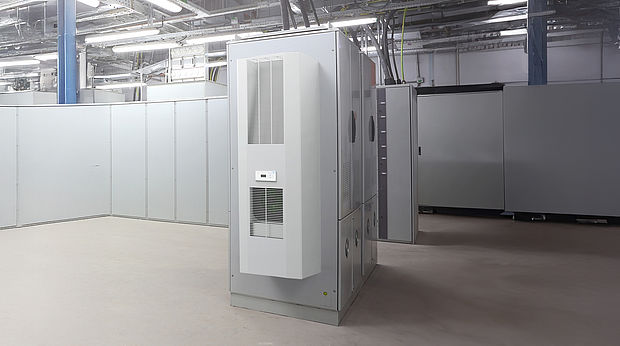
The right question
Not “Which refrigerant is recommended?” but “Which refrigerant is the right fit for this application?”
What we evaluate
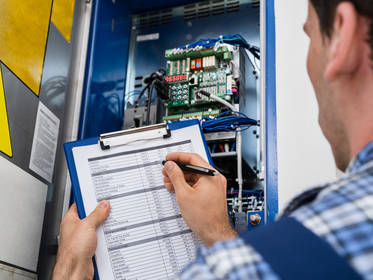
We evaluate operating conditions, safety requirements, serviceability, lifecycle impact, reliability, performance, and compliance considerations to ensure each cooling solution is aligned with the specific needs of the application.
Start with the application, not the refrigerant.
Every transition starts with understanding the application. Pfannenberg helps customers evaluate safety, reliability, compliance, and operational requirements to identify the right refrigerant solution. From planning and selection to retrofit support and long-term operation, we simplify the transition while protecting performance and ensuring confidence every step of the way.
Pfannenberg as solutions partner
We evaluate operating conditions, safety requirements, serviceability, lifecycle impact, reliability, performance, and compliance considerations to ensure each cooling solution is aligned with the specific needs of the application.
Safety: determined by the complete system - not GWP alone.
Refrigerant selection should be driven by the application, balancing safety, reliability, serviceability, lifecycle cost, and compliance requirements. A2L refrigerants can be a suitable option where application conditions support their use and appropriate safety measures are in place. For many industrial cooling applications, R513A remains a practical A1 non-flammable solution that supports a safety-first approach with reliable operation and simplified serviceability.

What is the safest refrigerant solution for my application?
| Aspect | R513A – A1 | R1234yf / R454C - A2L |
|---|---|---|
| Safety & Fire Risk | Non-flammable | Mildly flammable, safeguards required |
| Installation & Compliance | Standard requirements | Risk assessment, ventilation and charge limits review |
| Service & Training | Standard service practices | Additional training and handling procedures |
| Operations & Logistics | Simpler transport, storage and maintenance | Additional controls and safety procedures |
| Regulatory Path | Focused on safety and application requirements | Focused on minimizing GWP impact |
| Business Continuity | Easier adoption, lower operational disruption | Lower GWP but higher implementation complexity |
Risk Assessment: Your Trusted Advisor for Safe and Informed Cooling Decisions
Low-GWP refrigerants support sustainability and F-Gas compliance, but may introduce new considerations around flammability, installation conditions, maintenance and personnel safety. A risk assessment helps confirm whether a solution is suitable for the application, room characteristics, occupancy, service access and operating limits.
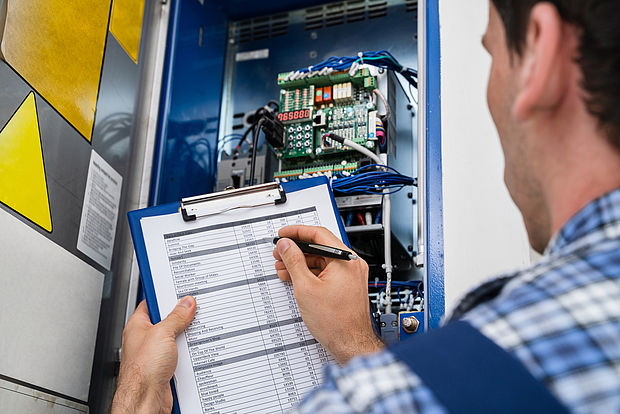
How We Support You
- Application-based guidance and technology selection
- Safety and compliance support
- Risk assessment services through qualified partners
- Recommendations for safe, reliable operation
Our approach is centered on identifying the (MET) most effective technology for the life of the application, helping customers balance safety, reliability, compliance and long-term operational performance.
Solution: From assessment to implementation
After understanding the application, evaluating safety and completing the risk assessment, the final step is selecting the cooling solution that best balances performance, compliance, sustainability, safety and total cost of ownership.
Future-Ready Thermal Solutions
Our portfolio continues to evolve so customers can choose safe, reliable and compliant solutions that match their application requirements.
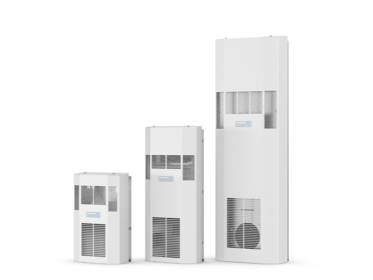
Cooling Units
Our full cooling unit portfolio is already undergoing the transition to R513A, with the complete upgrade scheduled for October 2026 - ensuring continuity, safety, and long‑term compliance for all our customers.
COOLING UNITS F-GAS ROADMAP
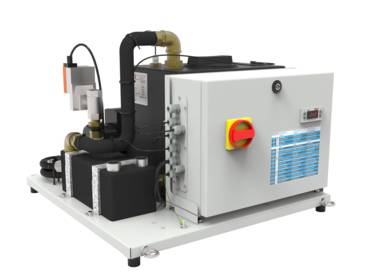
Chillers
Our chiller range up to 44 kW is already fully upgraded to R513A, with the remaining models up to 200 kW - along with the A2L versions for units below 12 kW - scheduled for completion before the end of 2026.
CHILLER F-GAS ROADMAP
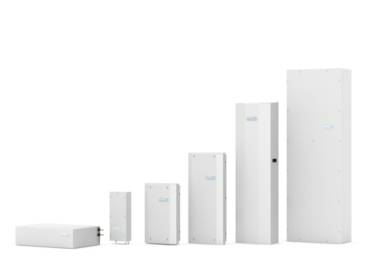
Refrigerant Free Thermal Solutions
In some applications, refrigerant-free cooling technologies can be the most effective long-term solution, supporting safety, reliability a nd simplified operation.
Safe. Reliable. Compliant.
Built around the application.
Here to Support You
Need help understanding or applying the new F-Gas regulation? Click below for guidance and support from our Pfannenberg experts.
Map Your Cooling System
Would you like to map your cooling units or chillers to update your portfolio? Get a professional crossreference.
Customs & Safety Documents
For applications subject to safety regulations, the F-Gas Regulation allows refrigerants with a GWP below 750. Access related documents and customs guidance here.
Speak with an expert
To provide even more targeted support during this challenging transition phase, Pfannenberg is now offering a personal expert service. The consultations are available in German, English and Italian.
FAQs
How does Pfannenberg help me stay compliant with F‑Gas requirements?
Pfannenberg actively tracks evolving F‑Gas regulations across all markets and ensures that every product recommendation reflects the current classification status. Compliance is handled as part of our process - not as something customers need to manage alone. We provide clear documentation, support customs requirements, and communicate early about any regulatory or timeline impacts, so your equipment remains safe, reliable and compliant throughout its lifecycle.
How do I know which cooling solution is right for my application?
We begin with the application, not the refrigerant. Our team evaluates the operating environment, installation conditions, proximity to personnel, and the consequence of failure. Only after understanding these safety and performance requirements do we recommend the most appropriate cooling solution. This approach ensures that safety, reliability and compliance guide the decision - not regulation alone.
What documentation supports customs and compliance?
Pfannenberg provides all necessary compliance and customs documentation, including classification details and regulatory support materials. Because customs clearance and shifting timelines are a major customer concern, we make documentation easy to access and communicate proactively about any potential impacts. Our goal is to remove uncertainty and help ensure smooth delivery and regulatory confidence.
What should I consider if my application involves flammable refrigerants?
Applications involving A2L or A3 refrigerants require careful evaluation of safety requirements. Pfannenberg provides guidance on ventilation, handling procedures, installation conditions and risk‑assessment considerations appropriate to mildly flammable (A2L) or flammable (A3) refrigerants. We treat these recommendations with seriousness and ensure customers understand the safety implications before discussing paperwork or compliance.
How does Pfannenberg support risk‑assessment conversations?
Pfannenberg supports your risk‑assessment process by helping you evaluate the factors that matter most for safe operation—your environment, installation conditions, operator proximity and long‑term reliability. We walk through these considerations with you so you can make informed decisions about the right cooling approach. Formal site‑specific validation always remains with you or your appointed assessor, but we provide the guidance, application review and safety insights needed to support a confident, well‑grounded risk‑assessment discussion.
When does R513A make sense, and when might A2L be appropriate?
R513A (A1) is our recommended standard for most industrial applications because it is nonflammable, proven, and reliable across a wide range of environments. It is often the safest and most practical starting point. A2L options—such as R1234yf or R454C—are available. Both A1 and A2L are valid choices, selected based on application needs, safety requirements and installation conditions.
Why does Pfannenberg start with the application instead of the refrigerant?
Because the safest, most reliable and compliant solution depends on the specific operating environment, safety requirements and performance needs of the application.